
Introduction
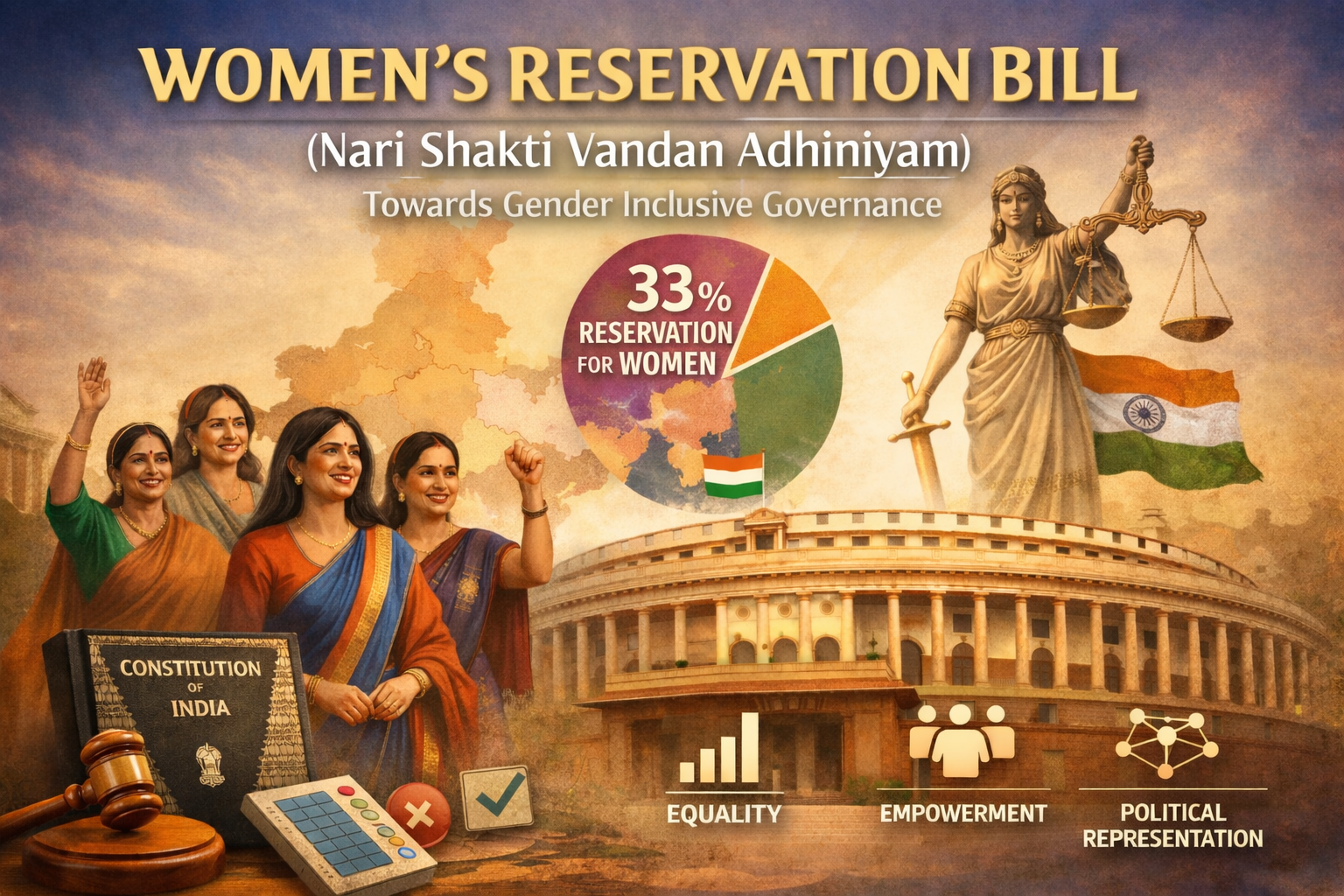
The Women’s Reservation Bill, 2023 (Nari Shakti Vandan Adhiniyam) mandates 33% reservation for women in the Lok Sabha and State Legislative Assemblies, marking a major constitutional step toward gender-inclusive governance.
Key Provisions (Data-Oriented)
| Feature | Details |
|---|---|
| Reservation % | 33% seats |
| Coverage | Lok Sabha + State Assemblies |
| SC/ST Quota | Included within 33% |
| Implementation | After Census + Delimitation |
| Rotation | Yes (periodic) |
Current Representation vs Post-Bill Scenario
| Indicator | Present (Approx.) | After Implementation |
|---|---|---|
| Women in Lok Sabha | ~15% | 33% |
| Global Average | ~26% | Above global average |
| Top Performer (Rwanda) | ~60% | — |
👉 Jump of ~18 percentage points → Significant structural shift
Impact of the Bill
1. Democratic Deepening
- Representation increases from ~15% → 33%
-
Reduces gender gap by over 50%
2. Governance Outcomes (Evidence-Based)
| Sector | Observed Impact (Local Bodies) |
|---|---|
| Health | Higher investment |
| Education | Improved access |
| Welfare | Better targeting |
👉 Women leaders focus more on human development indicators
3. Social Empowerment
- Breaks patriarchal barriers
-
Increases female political participation rate
4. Political System Transformation
-
Forces parties to:
- Field more women candidates
-
Build women leadership pipelines
Criticism / Challenges
1. Implementation Delay
-
Dependent on Census → No fixed timeline
👉 Risk: De facto delay despite de jure reform
2. Lack of OBC Sub-Quota
| Category | Status |
|---|---|
| Women (General) | Included |
| SC/ST Women | Included |
| OBC Women | ❌ Not specified |
👉 Raises equity vs equality debate
3. Rotation System Issues
| Issue | Impact |
|---|---|
| Frequent rotation | Weak accountability |
| Short tenure focus | Limits long-term development |
4. Proxy Representation
- Risk of male dominance behind women representatives
-
Though evidence suggests decline over time
5. Elite Capture
| Risk | Explanation |
|---|---|
| Urban dominance | More access to resources |
| Political families | Easier entry |
👉 Marginalized women may still lag behind
Comparative Perspective
| Country | Women Representation |
|---|---|
| Rwanda | ~60% |
| South Africa | ~45% |
| UK | ~34% |
| India (Current) | ~15% |
| India (Post-Bill) | 33% |
Conclusion
The Bill can potentially double women’s representation and reshape India’s democratic structure. However, its success depends on timely implementation, inclusive design, and political will.
Mains Closing Line
The Women’s Reservation Bill is not just a question of numbers (33% seats), but a step toward 100% democratic legitimacy.
Mains Value Addition
Quote for Essay/Answers
"“There can be no democracy without equal participation of women.” – B.R. Ambedkar"
Key Data & Statistics
Women representation in Lok Sabha (2024): ~15% , Women representation in Lok Sabha (2024): ~15% ,Rwanda: ~60% (highest in world) , India ranks ~140+ globally in women parliamentary representation
Committee / Case Law
National Commission for Women – Advocated political reservation , Inter-Parliamentary Union reports on gender gap in legislatures , Law Commission (various discussions on electoral reforms)
UPSC PYQ & Mains Practice
Discuss the significance of women's participation in political leadership for inclusive governance in India.
Examine the role of women in local self-government institutions and their impact on governance
Do you think that reservation of seats for women in legislatures is necessary for ensuring gender equality? Justify your answer.
Discuss the importance of women’s empowerment in achieving inclusive growth.
What are the challenges faced by women in India in public and political spheres?
Critically examine the need for reservation of women in Parliament and State legislatures